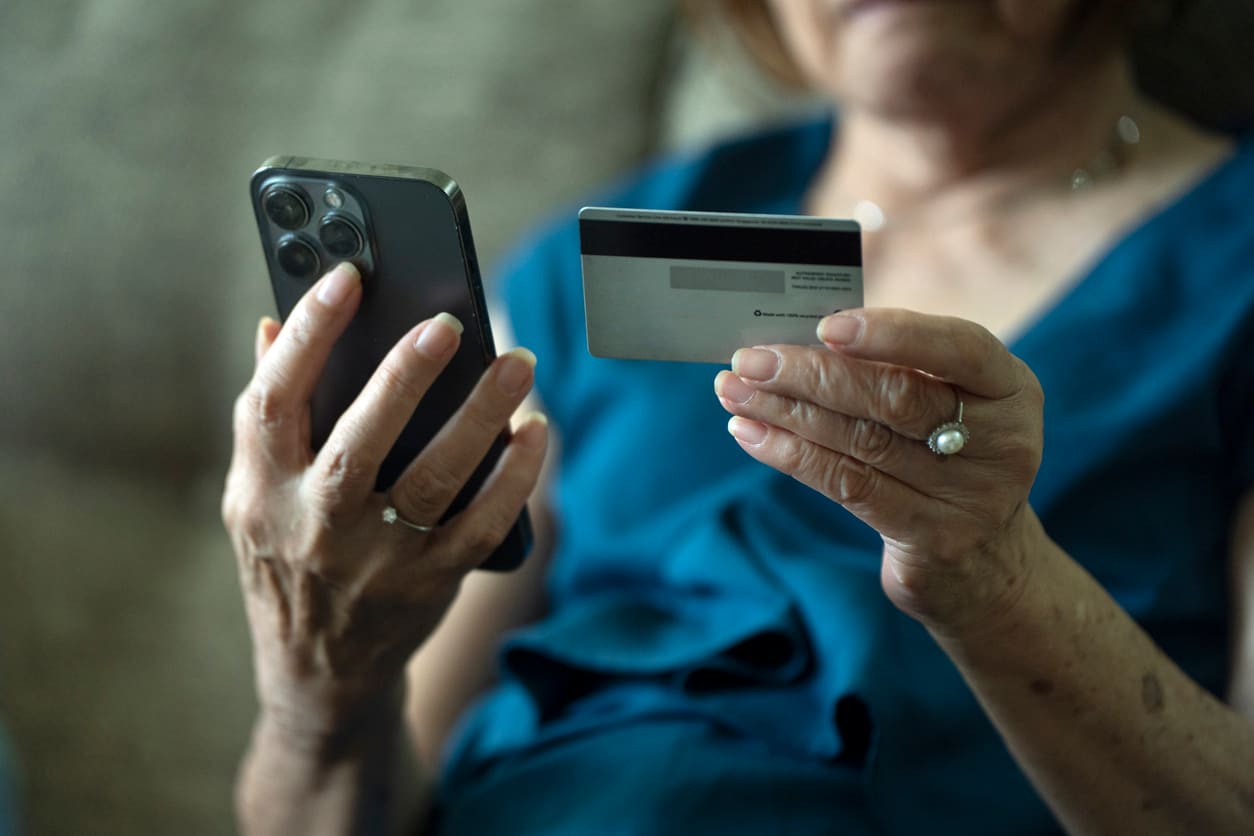

Between 2024 and 2026, the proportion of French people who reported having falsified a document at least once increased from 10.8% to 13%. This figure, from the Finovox studies conducted among over 8,000 respondents in 8 European countries, is not an isolated case. Indeed, the same trend is observed everywhere, with varying rates but a common direction. Fraud is diversifying, tools are becoming more accessible, and the fear of detection is decreasing.
Discover the main forms of document fraud in 2026 (banking fraud, insurance fraud, identity fraud, and everyday fraud), based on data collected in France, Belgium, Germany, Spain, Italy, the Netherlands, the United Kingdom, and Sweden.
Artificial intelligence and dematerialization: the new tools of fraud
For a long time, falsifying a document required a certain skill, but that is no longer the case.
Within the Finovox study, generative AI and the dematerialization of exchanges emerge as the two factors most strongly associated with the evolution of fraud.
This increase is accompanied by a normalization of committing the act.
Photoshop, Word, Canva, and online PDF editors are now accessible, often free, and allow for the easy production of visually convincing falsified documents, without any particular technical skills.
The most significant transformation concerns fraudsters' perception of risk, which has profoundly changed between 2024 and 2026.
In 2024, 69% of them claimed not to know the legal consequences of their actions. In 2026, 64% commit fraud knowingly, without fear. And 65% say they are ready to do it again, compared to 3% two years earlier.
We have moved from ignorance to deliberate indifference.
Banking fraud: the most exposed sector in 2026
The banking sector is particularly affected by document fraud. In Northern Europe, it is among the most exposed.
Banks often serve as the entry point for broader fraudulent schemes: a falsified bank account number can lead to a diverted transfer, and a stolen identity can be used to open an account under a false name.
According to Julien Lasalle, Deputy Director of Payment Studies and Oversight at the Banque de France, in our webinar : "Documentary fraud often serves as the gateway to payment fraud."
So, what are the different types of fraud in the banking system? Let's take a look.
Phishing: A Silent Threat
Phishing involves sending an email, an SMS, or sometimes making a call, impersonating a trusted organization to trick the victim into revealing personal or banking data.
The message often appears credible, which makes the scam effective.
Good to know:
the national cybercrime victim assistance program provides three tips
- never share your passwords or bank details via message or phone
- check links before clicking
- contact the organization directly if in doubt
In case of suspicion, also remember to notify your bank, change your passwords, and report the message via Phishing Initiative or Signal Spam.
Bank Transfer Fraud
Bank transfer fraud, also known as fake RIB fraud, relies on a simple principle: replacing the legitimate IBAN with the fraudster's. The transfer is then redirected.
To limit this type of fraud, France has strengthened its framework with the creation in 2025 of a national register of fraudulent IBANs, compelling companies to further verify bank details.
Spoofing and fake bank advisors
Spoofing takes the logic of impersonation even further: the fraudster presents themselves using a bank's official phone number or address, and the victim, convinced they are dealing with their advisor, ends up disclosing their codes or validating a transaction.
Fraudsters often replicate all the hallmarks of a genuine banking service (hold music, fake supervisors, prepared scripts), making these calls particularly difficult to identify in real-time.
Credit card and payment method fraud
Credit card fraud accounts for a significant portion of banking fraud.
In Belgium, it amounts to 28% of fraudulent documents.
Fraud methods are varied:
- Online payments with stolen data
- Fake banking emails mimicking security alerts
- Skimming: cloning a card's chip or magnetic stripe via a fraudulent reader installed on an ATM or payment terminal
All these techniques exploit the same weakness: the difficulty of verifying the legitimacy of a transaction or document in real-time.
Insurance fraud: between fictitious claims and falsified sick leave
Car and home insurance fraud
Property and casualty insurance fraud (car, home, civil liability) remains one of the most common forms of document fraud.
For example, in Belgium, it accounts for nearly 20% of recorded cases, and 24% in Germany.
The methods vary: false claims, staged accidents, deliberately inflated damages, or altered repair invoices. The objective is always the same: to make the compensation claim appear legitimate.
In the field of car insurance, fraud can also occur right from the policy inception. Some policyholders submit forged documents, such as a driver's license or vehicle registration, to obtain a policy or reduce their insurance premium.
Other frauds emerge at the time of a claim, such as exaggerated damages, bogus car thefts, or altered repair invoices to obtain higher compensation.
Healthcare Fraud
The CNAM detected and prevented 723 million euros in fraud in 2025, a 15% increase compared to 2024 and three times more than in 2021. This record, however, is still well below the actual figure: the Court of Auditors estimates the total amount to be several billion euros.
Contrary to popular belief, policyholders do not account for the largest share!
Healthcare professionals account for nearly three-quarters of the total, including health centers (€138 million), hearing aid specialists (€86 million), and medical transport providers (€62 million).
Among policyholders, the sick leave fraud remains the most significant: €49 million detected in 2025, including €34 million in false sick leave. The prescription fraud shows a similar trend, driven by the widespread use of digital prescriptions.
Medical certificates also play a significant role in these schemes. They are among the most falsified documents in Spain (31%) and Italy (29%), particularly in cases related to sick leave or certain personal injury claims.
Everyday Fraud: The Most Common Yet the Most Widespread
Everyday fraud remains the most prevalent in Europe.
Whether it's forging an ID to get a discounted subscription or using a fraudulent Navigo pass, these practices rely less on sophisticated schemes and more on opportunities perceived as simple and low-risk.
This logic is particularly evident in France and the UK, where over a third of fraudsters primarily cite saving time or avoiding administrative hurdles.
The figures support this: 82% of French fraudsters report success.
Fake diplomas clearly illustrate this normalization. They allow individuals to secure a position without the required qualifications or to aim for higher pay.
Identity Fraud: When AI Erases the Last Barriers
Identity theft, meaning using another person's name, date of birth, social security number, or banking details for illicit purposes, accounts for almost 22% of document fraud in Belgium and 19% in Italy.
Deepfakes now make it possible to bypass certain biometric verifications. Fake social media profiles are used to build false credibility, extract personal information, or fuel romance scams that precede more elaborate fraud.
The data shows a continuous progression of the phenomenon rather than a sudden surge. Fraud is increasing, profiles are diversifying, and practices once reserved for organized actors are now accessible to almost anyone with a computer and an internet connection.
For organizations, the challenge is no longer whether they will encounter falsified documents, but rather having the right tools to detect them.
Looking to strengthen your anti-fraud measures? Request a demo of the Finovox solution and discover how our technology detects falsified documents from the moment of subscription.
Sommaire
.jpg)